
Software and automation
Why your business needs AI now, and how it saves you money
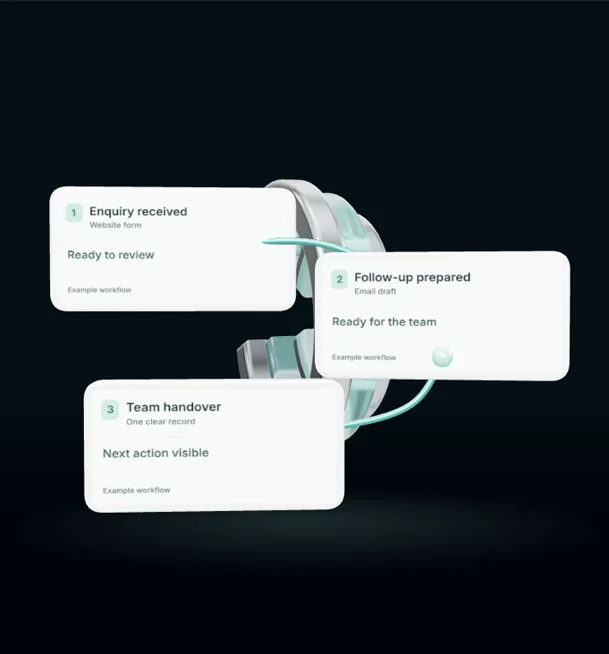
If you run a small business and keep hearing that you need AI, you are probably wondering whether it will actually save you money or just cost you more. The honest answer is that AI now saves money in very ordinary places: answering the phone, replying to messages, chasing enquiries, writing posts and doing the paperwork nobody enjoys. The businesses that start now will be quicker and cheaper to run than the ones that wait.
This guide covers where AI is heading, where it already saves money, and how to start without wasting a penny.
Where AI is heading
A few years ago AI could finish your sentences. Today it can read an email, understand what the customer wants, check your diary and draft a reply. Over the next few years it will do more of the work in between: taking an enquiry from first message to booked job with a person only stepping in where they add something.
You do not need to follow the technology closely to benefit from it. What matters is that the tools are now cheap, they work on a phone, and they plug into the things you already use, like WhatsApp, Facebook, Google and your website.
Your customers are changing too. More people now ask ChatGPT or Google's AI answers which local business to use, instead of scrolling through ten websites. If your business is not set up to be found and to reply quickly, someone else will get the job.
Where AI already saves money
Answering enquiries out of hours
Most enquiries arrive when you are busy or asleep. A roofer up a ladder cannot answer the phone. A takeaway owner on a Friday night cannot reply to Instagram messages. Every enquiry that waits until the morning is an enquiry that might have gone elsewhere.
An AI chat assistant on your website, or on your Facebook and Instagram messages, replies straight away. It asks the questions you would ask, takes the details and sends them to your phone. You wake up to a list of real enquiries with names, numbers and what they need, instead of missed calls.
That is the same job as a part-time receptionist, for a small monthly cost.
Following up so jobs do not slip
Many small businesses lose work after the first conversation. The quote goes out, nobody chases it, and the customer books someone else. A simple system that reminds you who to call, or sends a polite follow-up for you, wins back jobs you were already paying to attract.
This is where a CRM with a little automation earns its keep. Every enquiry lands in one place, it shows you what needs doing today, and nothing depends on remembering.
Writing and posting
Keeping social media going takes hours a week. AI can draft posts, captions and replies in your voice, turn one good photo or video into several posts, and schedule them for the week. You still check everything before it goes out, but the blank page is gone.
Paperwork and admin
Invoices, receipts, reports and data entry are where hours quietly disappear. AI can read an invoice from your email and put it in your spreadsheet, prepare a weekly report of how many enquiries you had and where they came from, and flag anything that needs your attention. None of this is glamorous. All of it adds up.
Why waiting costs more than starting
It is tempting to wait until AI settles down. The problem is that your competitors are not waiting. The business down the road that replies to every enquiry in seconds, follows up every quote and posts every day will look busier and more reliable than you, even if your work is better.
Starting small is cheap. You do not need a big project or a new computer system. One chat assistant on your website, or one automation that sends enquiries straight to your phone, is enough to see the difference. Once you have seen it work, you add the next piece.
What AI should not do
AI should not pretend to be a person if a customer asks, and it should not make promises you cannot keep, like quoting a price without seeing the job. The best setups let AI handle the routine part and pass anything important to you, with the details already collected.
Keep a person in charge of decisions about money, prices and anything sensitive. AI is there to save you time, not to run your business for you.
How to make a start this month
- Write down where time goes. Which tasks repeat every week? Replying to the same questions, chasing quotes and typing details into a spreadsheet are good candidates.
- Pick one task. Choose the one that costs you the most enquiries or the most hours.
- Try one tool. A chat assistant, a lead form that goes straight to your phone, or an automated follow-up.
- Check it every week. Read what the AI said to customers. Adjust the wording until it sounds like you.
- Add the next piece. Once the first job is running on its own, move to the next.
How we can help
At Coresight Creative we build the AI tools described here for our own businesses first: website chat assistants, Instagram and Facebook message bots, systems that send every enquiry to your phone, and automations that take admin off your hands. If you want to see what would save your business the most time and money, get in touch and we will look at it with you.